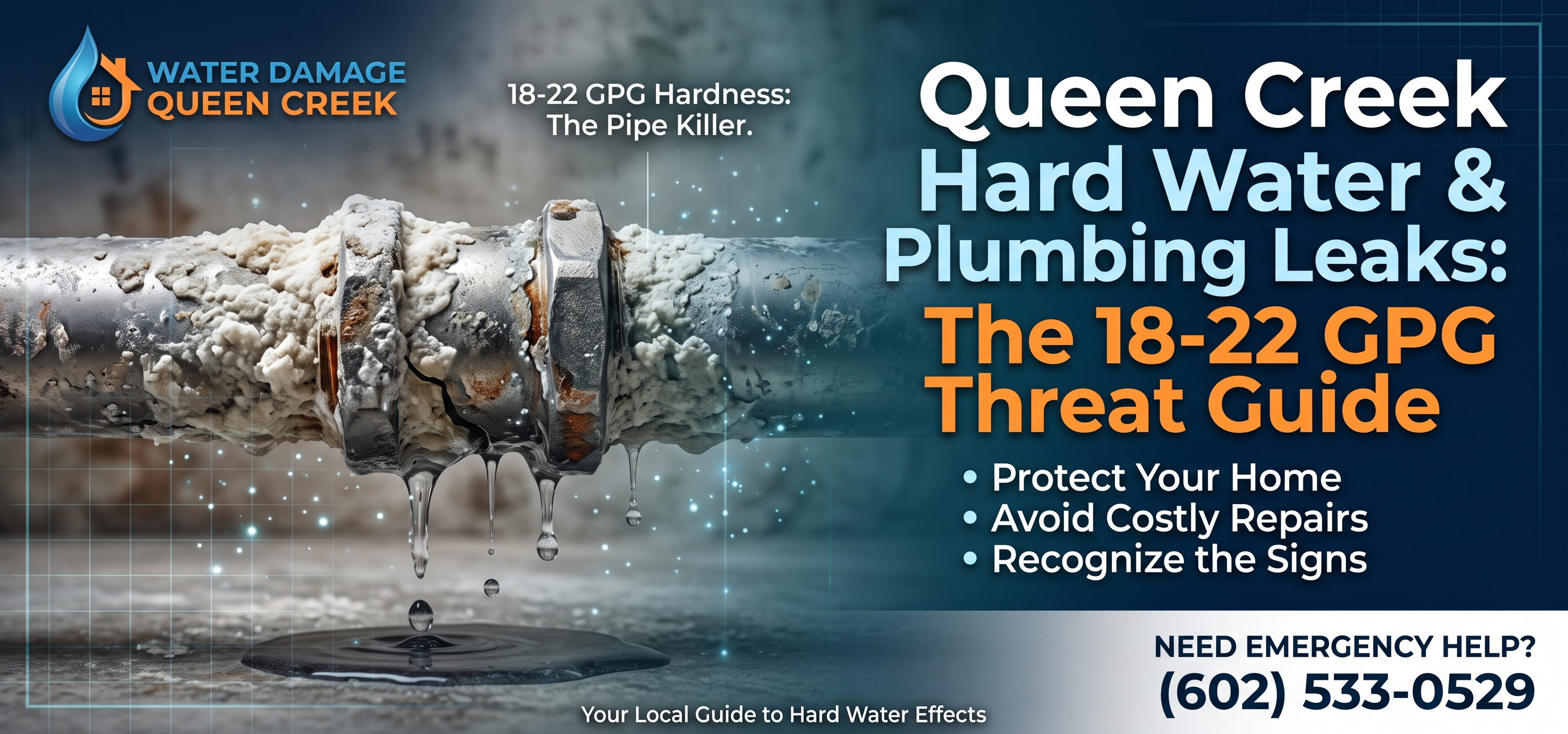
The Queen Creek Hard Water Reality
Queen Creek municipal water measures between 18 and 22 grains per gallon (GPG), categorizing it as "extremely hard" by water quality standards. This heavy mineral concentration coats the interior of copper plumbing and accelerates galvanic corrosion, making supply line bursts and tank water heater failures the #1 cause of residential water damage across Maricopa and Pinal County homes.
Why 18-22 GPG Hard Water Is So Destructive
In communities like Cortina, Ironwood, and Sossaman Estates, water sourced from deep groundwater aquifers contains elevated concentrations of dissolved calcium carbonate and magnesium. When water is heated or sits under pressure, these minerals precipitate out of solution, forming hard rock-like scale inside appliances.
1. Water Heater Tank Scale & Bottom Ruptures
As mineral scale accumulates at the bottom of traditional water heaters, it insulates the water from the gas burner or lower electric element. This traps extreme heat beneath the sediment layer, overheating the tank steel until micro-fractures develop, resulting in sudden 50-gallon floods inside garages and utility closets.
2. Braided Stainless Steel Supply Line Decay
Many homeowners believe braided stainless steel lines are indestructible. However, the rubber core inside toilet, washing machine, and dishwasher supply lines stiffens and corrodes rapidly when exposed to Queen Creek's calcified mineral deposits, leading to sudden high-pressure blowouts while residents are at work.
3. Reverse Osmosis (RO) System Fitting Blowouts
Under-sink RO systems work overtime to filter Queen Creek's 18–22 GPG water. The high line pressure and scale buildup cause plastic push-connect fittings to crack, leaking unmonitored water into kitchen cabinetry and subflooring for days before discovery.
Dealing With an Active Plumbing Burst?
Our Queen Creek emergency extraction crews respond within 30–45 minutes with truck-mounted drying units to extract standing water and dry drywall before toxic mold germinates.
Call Emergency Dispatch: +16025330529Preventative Maintenance for Queen Creek Homeowners
- Annual Water Heater Flushes: Purge sediment tanks every 6–12 months to prevent bottom-plate thermal fracturing.
- Replace Rubber Lines with PEX/Reinforced Copper: Swap washing machine and toilet lines every 4 years.
- Whole-Home Water Softener Maintenance: Ensure your ion-exchange resin bed is regularly regenerating to drop hardness below 3 GPG.
- Install Automatic Shutoff Valves: Smart flow meters (like Moen Flo) detect pinhole micro-leaks and shut off the main valve automatically.
Frequently Asked Questions
Does Queen Creek have hard water?
Yes, testing routinely shows 18 to 22 GPG, which is nearly triple the national threshold for hard water.
Will insurance cover water damage from a burst water heater?
Yes, sudden and accidental water release from water heaters is covered under most standard Arizona homeowners policies. We bill carriers directly.